People encouraged to grow their own food as poverty & hunger levels increase
In a webinar hosted by the UWC’s Institute for Poverty, Land and Agrarian Studies and the Centre of Excellence in Food Security under the theme: Food is our right – the struggle for equitable food systems, it was highlighted how the lockdown further aggravated hunger in poor households.
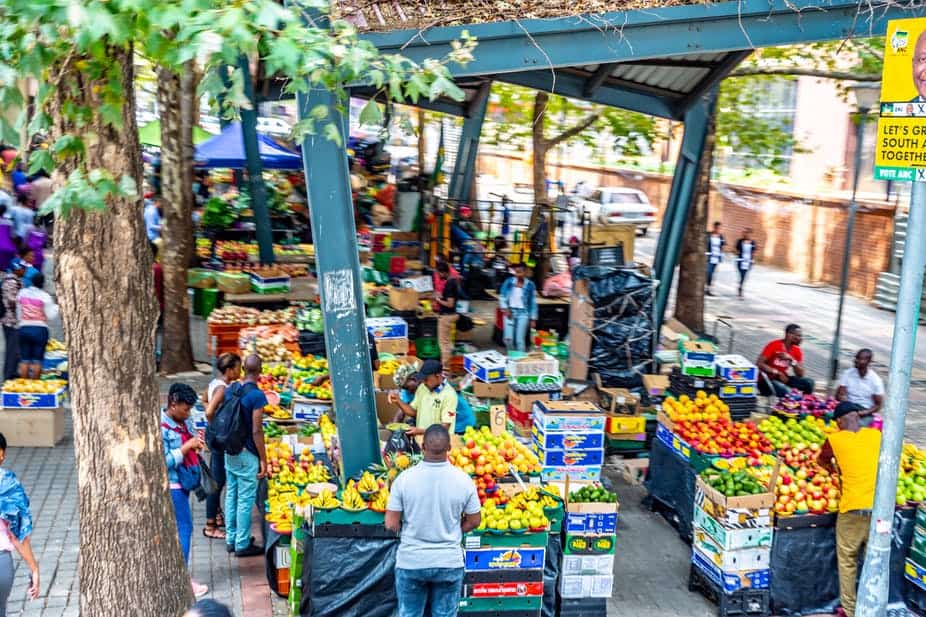
Activists protest against growing hunger in a land of plenty
Friday, 16 October, was World Food Day. For activists across South Africa and the world, the day was an opportunity to highlight the plight of hungry and undernourished people, a crisis which has been globally exacerbated by the Covid-19 pandemic.
Social security could make life better in South Africa after COVID-19
Injecting purchasing power into poor households will stimulate demand and assist economic recovery. Reimagining social security in South Africa is not only a humanitarian imperative and a means of achieving social justice, it makes economic sense. It is something that the country cannot afford not to do.

The country will take years to recover economically. Ziyaad Douglas/Gallo Images via Getty Images
Centre of Excellence in Food Security discusses COVID impact on the vulnerable
The impact of the COVID-19 on the vulnerable was discussed in a webinar hosted by the Centre of Excellence in Food Security on Tuesday. Panellists looked at safety nets and how social emergency relief measures performed in the face of the global pandemic.
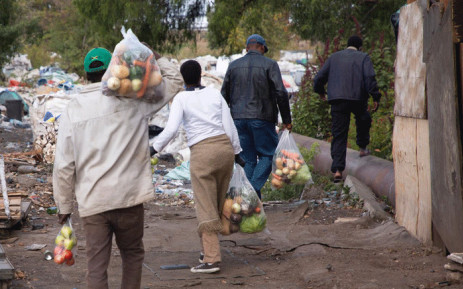
Food parcels were distributed to resident of Booysens informal settlement on 29 April 2020. Pictures: Sethembiso Zulu/EWN.
Government urged to do better with implementing social safety net interventions
Researchers and academics have called on government to do better in the implementation of social safety net interventions. The nation has been through months of varying stages of lockdown, mass job losses and an increase in the number of vulnerable people depending on government for the bare minimum to get by. Panelists on a webinar organised by the Centre of Excellence in Food Security flagged major problems during lockdown and a potentially insecure future ahead.
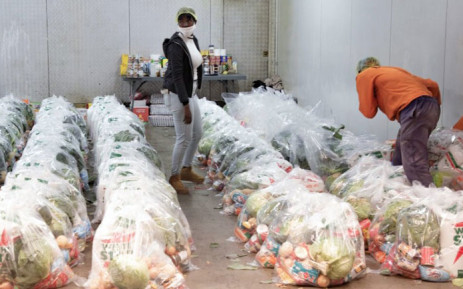
Calls for SA government to make relief measures permanent
Some NGO’s want the government to make the Covid-19 emergency relief measures permanent from October, especially the one that allows citizens aged 18-59 to access state assistance for the first time ever, to create a basic income grant.

The country had crossed a critical threshold in making income available to working-age people, so recognising that this group merited help in a country with its problems of poverty, high unemployment and inequality, according to a statement yesterday.
A recent webinar Social Protection in South Africa: Building back better post COVID-19, which was hosted by the DSI-NRF Centre of Excellence in Food Security, aimed to highlight the gaps in South Africa’s social protection system exposed by the pandemic. The issue is especially significant now as the end of the six-month emergency relief measures approaches.
The organisation’s national director Lynette Maart said the Black Sash was seeking 1 million signatures for its online petition calling on President Cyril Ramaphosa, along with Social Development Minister Lindiwe Zulu, her Finance counterpart Tito Mboweni and the National Treasury to permanently implement social assistance for this “missing middle group”.
This group of people are at the upper bound poverty line currently at R1 227($73.84) a month, she said.
“Research has shown up the huge gap in terms of support for this group, who have enjoyed access during the lockdown period to the Special Covid-19 Social Relief of Distress grant. Rather than ending it in October, we must work with that as a start – taking us forward to the ultimate goal of a universal Basic Income Grant,” she said.
This is an abridged version of the the article published by Channel Africa. Access the full article here.
South Africa’s student hunger crisis – and how to address it
Student hunger is a huge problem across SA higher education institutions, but there is no legislative framework that addresses it. On Thursday, the Dullah Omar Institute hosted a webinar discussing the problems and solutions to student hunger.

Postpartum depression and stress diminish the likelihood of exclusive breastfeeding in SA
Breast milk plays a vital role in reducing child mortality. It has all the nutrients a baby needs in the first six months of life and its health benefits extend into adulthood. This is why organisations, like UNICEF and the World Health Organisation (WHO), recommend exclusive breastfeeding – no other food or drink, not even water – for infants in this period.
A lot is still uncertain about breastfeeding practices in South Africa. Getty Images