Women at the centre of the food cycle – webinar on food security post-Covid-19
A virtual dialogue looking at the important issues surrounding food security pre- and post-Covid-19, has revealed that women are at the centre of the food cycle. Hosted by the DSI-NRF Centre of Excellence in Food Security, presenters at the webinar revealed that access to food does not take place in a vacuum but rather in the politics around it.
Informal traders share their lockdown stories of survival and making do
The Covid-19 pandemic has thrown the spotlight on the importance of the informal economy as a means of survival for South Africa’s 2.9 million citizens without access to formal employment – as well as their resulting vulnerability. This is another stark reminder that the government can no longer afford to ignore the need for formal support of the informal sector.
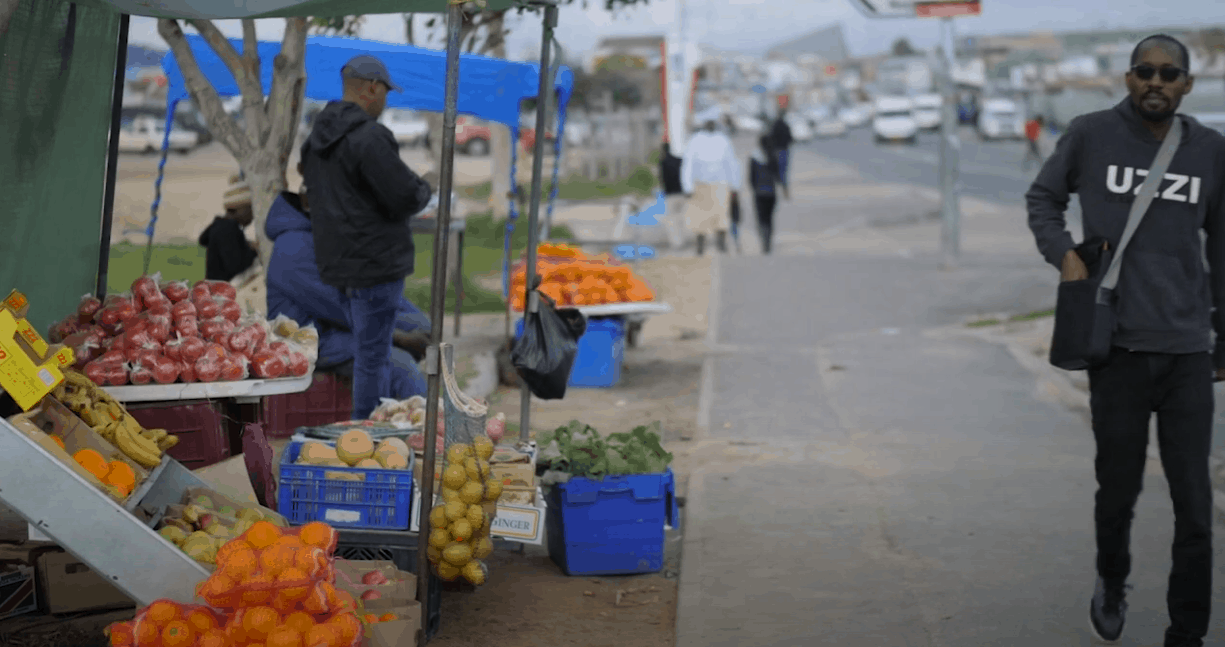
For these traders operating in the informal economy, moulding a new way of life and adapting to external forces to survive is not a foreign concept.
South African policy is failing to connect child nutrition and sanitation
South African policy is failing to connect child nutrition and sanitation. When faced with complex problems that require co-ordination and collaboration, government departments almost instinctively retreat to their silos and predetermined responses. As a result, workable solutions often fall through the cracks and citizens pay the price.

Feeding in a crisis: Social protection and governance during the pandemic
Of the three million people who lost their jobs in South Africa, two thirds of those were women, specifically black women, meaning that they have undeniably and disproportionately borne the brunt of the Covid-19 crisis.

Bottom-up approach to food relief, if properly instituted in a dignified, collaborative manner, is the way to go with grassroots food distribution
Poor have borne the brunt of “inappropriate” Covid-19 regulations, experts say
The loss of jobs and desperately needed revenue to the state resulting from Covid-19-related restrictions will negatively impact the critical funding of social protection programmes. Addressing the webinar, the director of the Centre of Excellence in Food Security at the University of the Western Cape, Professor Julian May, said the loss of jobs and desperately needed revenue to the state resulting from Covid-19-related restrictions would negatively impact the critical funding of social protection programmes.
South African Policy Isn’t Connecting Child Nutrition and Sanitation
A study of 70 low- and middle-income countries found that increasing access to and use of improved water sources reduced the risk of stunting in children under the age of five years. But poor access to clean water and proper sanitation remains a pervasive concern across Africa.
Changing our behaviour to improve food security
Across the world, COVID-19 has persuaded people to think more carefully about changing their behaviour. We need the private sector, NGOs and government officials to change their behaviour, for example, by prioritising the sale of food that is healthy over food that is profitable, and favouring community-driven approaches over top-down directives.
The world is in an unprecedented situation in which unprecedented moves must be made, and we should be ready to acknowledge mistakes and improve our individual and collective behaviours.
Despite South Africa’s food secure status at national level and the evidence that the country produces more food than it needs, there is a worrying degree of food insecurity at household level. The 2017 Statistics South Africa (Stats SA) report “Towards measuring the extent of food security in South Africa: An examination of hunger and food inadequacy” reveals that 20% of households did not have access to adequate food during the period studied.
The private sector, NGOs and government should prioritise the sale of food that is healthy over food that is profitable, and favouring community-driven approaches over top-down directives.
Leave a Comment